Profile
Billy Williams
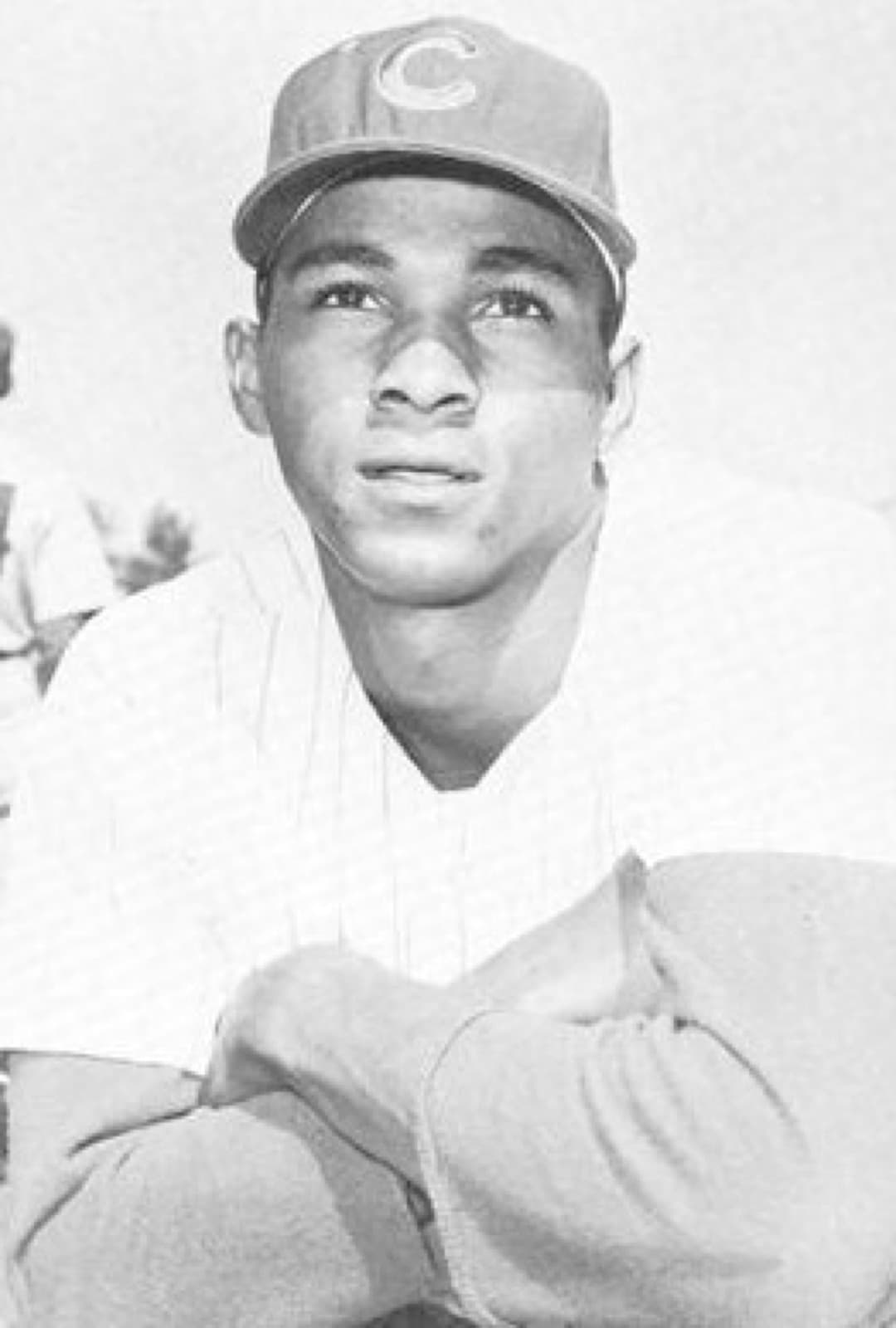
Billy Williams portrait, 1964.
Photo credit: Unknown author via Wikimedia Commons (Public domain)
Billy Leo Williams hit 426 home runs, collected 2,711 hits, and played 1,117 consecutive games for the Chicago Cubs, and for most of that time the sportswriters who covered Wrigley Field wrote about somebody else. Ernie Banks was the franchise, Ron Santo was the personality, and Williams was the left fielder who showed up every day, hit from both sides of the count with a swing so clean that Willie Stargell called it "poetry in motion," and went home without making noise. Dave Cash of the Phillies said, "This man is a ballplayer, and nobody writes about him." Stargell put it more sharply. "But for all you hear about him you'd think he was playing in the dark." Leo Durocher, who managed Williams for seven years, described what it was like to fill out a lineup card with Billy Williams on it. "You write his name down, in the same spot every day, and you forget it. He will play left." The BBWAA elected Williams to the Hall of Fame in 1987 on 85.7 percent of the ballot.
Whistler
Williams was born on June 15, 1938, in Whistler, Alabama, a small town outside Mobile. His father Frank unloaded banana boats on the Mobile docks and played first base for the semipro Whistler Stars. His mother Jesse May did domestic work. Williams was the youngest of five children and played sandlot ball with the Mobile Black Bears, crediting childhood games with bottle tops and a stick for developing the bat speed that carried him to the majors.
Cubs scout Ivy Griffin traveled to Mobile to sign Tommie Aaron, Hank Aaron's brother, but signed Williams instead. The bonus was a bus ticket to Ponca City, Oklahoma, and a cigar for his father. Williams worked through the minors until 1959, when the Cubs promoted him to Class AA San Antonio, and for the first time in his life he encountered the open racism of the segregated South. Black players could not enter the team hotel or eat in the team restaurant. Williams sat on the bus while his white teammates went inside. After weeks of it he told his roommate to drive him to the train station. "I'm tired of this," he said. "I don't want to play the game no more." He went home to Whistler.
Buck O'Neil, the Cubs scout who knew Williams from his amateur days, was sent to bring him back. O'Neil took Williams to Prichard Park, where old classmates and neighbors crowded around the young ballplayer, excited about what he might become. O'Neil asked, "How you feel now?" Williams said, "I don't know, Buck, you know I might want to go back and play baseball again." Within days he returned to San Antonio and never looked back. "It was just lucky that Buck O'Neil came down," Williams said. "Buck knew exactly what he was doing."
Sweet Swingin'
Williams won the 1961 NL Rookie of the Year with a .278 average and 25 home runs, beating out Joe Torre, and he played in 1,117 consecutive games from September 22, 1963, through September 2, 1970, setting the National League record. On June 29, 1969, the day he broke Stan Musial's NL mark of 895, the Cubs held Billy Williams Day at Wrigley Field, gave him a Chrysler Imperial, and watched him go 4-for-5 in the second game of a doubleheader with two triples. More than 40,000 fans gave him a standing ovation when he struck out trying for the cycle.
Williams peaked in 1970 with a .322 average, 42 home runs, 129 RBI, and 205 hits, leading the majors in runs scored with 137, and finished second in MVP voting behind Johnny Bench. In 1972 he won the batting title at .333 with 37 home runs, fulfilling a prediction Rogers Hornsby made years earlier when the Hall of Famer served as Cubs batting coach. "One day, you're going to win the batting title," Hornsby told him. Williams finished second in MVP voting again, behind Bench again, and won The Sporting News Major League Player of the Year.
On July 11, 1972, Williams went 8-for-8 in a doubleheader against Houston at Wrigley, homering in each game. The bat he used is in the Hall of Fame collection. He put nails in it because he didn't want it to split. Five days after Sandy Koufax threw a perfect game against the Cubs in September 1965, striking out Williams twice, Williams faced Koufax again at Wrigley. He told teammate Glenn Beckert that Koufax would start him with a fastball away, and Williams drove it for a two-run opposite-field home run that won the game 2-1.
Williams saw the upside of batting behind Banks. "I hit 25 home runs simply because Ernie was behind me," he said. "He was hitting 35-40 home runs every year, and I knew the pitcher's not going to walk me. They're going to give me a good ball to hit, and I was just feasting off that."
Whistler Again
Williams played his final two seasons with the Oakland Athletics as a designated hitter and retired after the 1976 season with 13 consecutive years of 20 or more home runs. The Cubs retired his number 26 on August 13, 1987, and in 2010 unveiled a bronze statue of Williams outside Wrigley Field's southeast entrance. Williams coached and instructed in the Cubs and Athletics organizations for more than 20 years after playing, and he successfully advocated for Ron Santo's posthumous Hall of Fame induction in 2012. At his own induction speech in 1987, Williams spoke directly about the work still left to do. "The road is rocky and long," he said, "but the time has come for true equality. The next courageous step rests with the owners of the 26 major league clubs."
When the Cubs won the 2016 World Series, breaking a championship drought that stretched 108 years, Williams was there. "You thought about Ernie and Ron Santo," he said, "because we were teammates for so many years, and wishing that they could be here to see this excitement."