Profile
George Kell
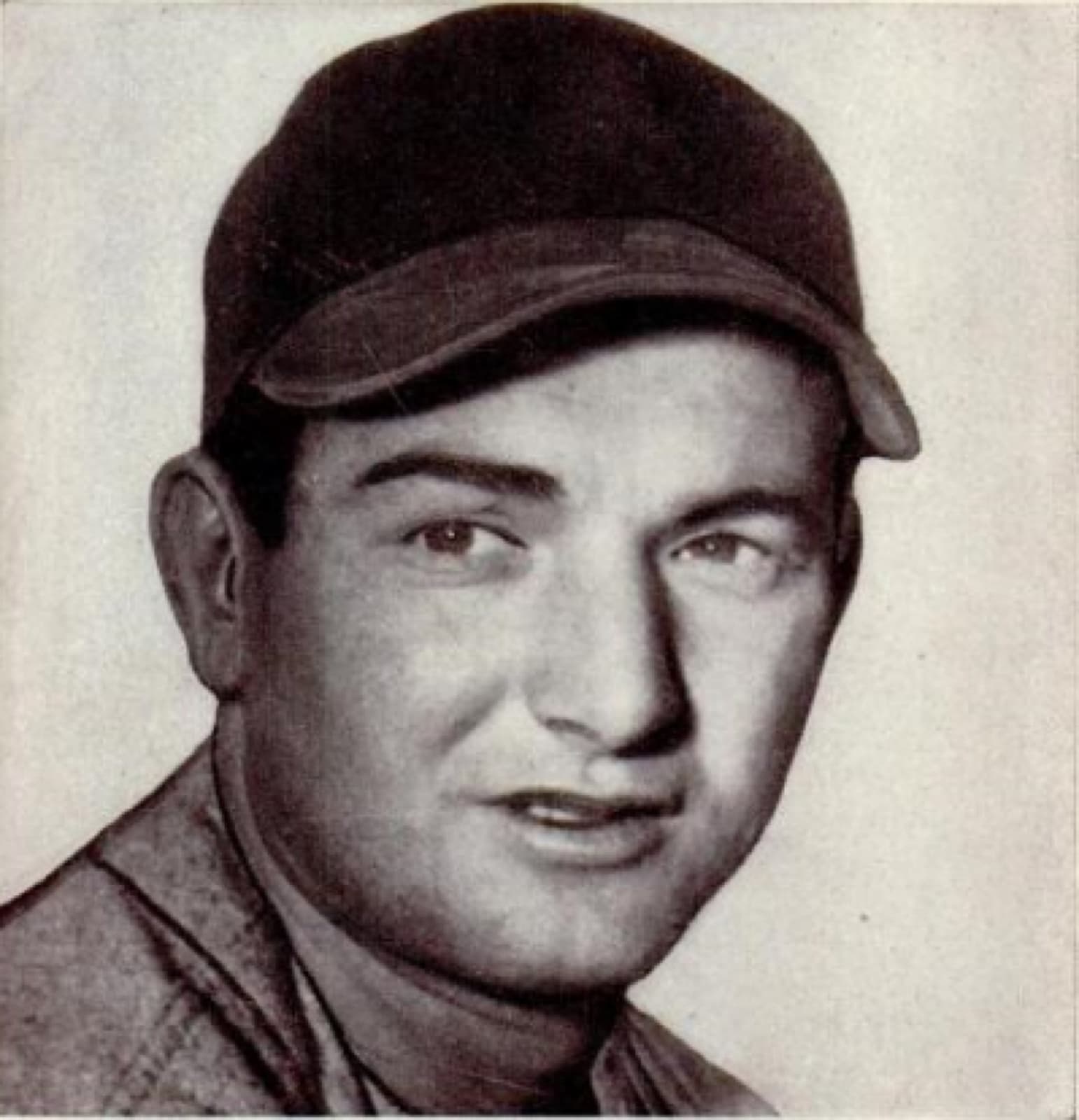
George Kell portrait.
Photo credit: Unknown author via Wikimedia Commons (Public domain)
George Clyde Kell won the 1949 American League batting title by two ten-thousandths of a point over Ted Williams, .3429 to .3427, denying Williams his third Triple Crown in the process. Kell hit .306 across 15 seasons, collected 2,054 hits, struck out only 287 times in 6,702 at bats, earned 10 All-Star selections, and led AL third basemen in fielding percentage seven times. Then he spent nearly four decades broadcasting Tigers games and became as much a part of Detroit's baseball identity as the players he described. "I have suspected for a long time that George Kell has taken more from this great game than he would ever be able to put back," he said at his Hall of Fame induction in 1983. "And now today I know that I am more deeply in debt than ever before."
Swifton
Kell was born on August 23, 1922, in Swifton, Arkansas. His father Clyde was a barber and former pitcher who raised his son on baseball. Kell worshipped the Gas House Gang Cardinals, especially Dizzy Dean, Joe Medwick, and Leo Durocher, and made the trip to St. Louis whenever the family could afford it. "There was never a time in my life when I didn't think about playing baseball," Kell said. His brother Everett, known as Skeeter, later played briefly for the Philadelphia Athletics in 1952.
Kell graduated high school at 16, enrolled at Arkansas State University, and signed with the Lancaster club of the Class B Interstate League in 1943, where he led all of professional baseball with a .396 average. Connie Mack purchased his contract that September, and Kell made his debut with the Athletics on September 28, 1943, tripling in his first at bat.
Detroit
Mack traded Kell to the Tigers on May 18, 1946, for Barney McCosky, a deal Mack later called one of his worst. Kell arrived in Detroit terrified. "I was scared to death," he said. "In the first inning, Johnny Pesky slashed one down third base, I made a backhand stab and threw him out at first, which really calmed me down." Kell hit .322 that year and began a run of eight consecutive seasons above .300.
In 1948 a Vic Raschi pitch broke his wrist on May 8, and a Joe DiMaggio ground ball fractured his jaw on August 29. Kell played only 92 games and still hit .304. The following year he produced the finest season of his career, batting .343 with 50 extra base hits and only 13 strikeouts, the fewest by a batting champion in the history of the award. On the final day, October 2, 1949, Kell went 2-for-3 with a walk against Cleveland while Williams went hitless in two at bats against New York. Kell's margin of .0002 remains among the closest batting races ever decided. "I remembered Ted Williams not sitting out the last day of the 1941 season after he was already at .400," Kell said, "and I wasn't about to back into a batting title against him."
Kell peaked in 1950 with a .340 average, 218 hits, 56 doubles, and 101 RBI, and he led the league in hits again in 1951 with 191. Despite 10 All-Star selections across his career, Kell never appeared in a postseason game.
The Booth
Two beanings in 1957 sent Kell to the broadcast booth during his recovery, where he worked alongside Ernie Harwell and discovered a second calling. Kell retired as a player after the 1957 season at 35 and joined the Tigers' broadcast team in 1959 after Mel Ott died in a car accident. Kell spent the next 36 seasons behind the microphone, partnering with Harwell in the early years and later with Al Kaline for more than two decades. Tigers owner John Fetzer told him to "report accurately and fairly," and Kell obliged with understated loyalty. "I'm for the Tigers," he said, "but I'm not a cheerleader."
Kell called World Series games for NBC in 1962 and 1968. The 1968 assignment was especially meaningful because he never played in a World Series himself. He rejected an offer to call ABC's Game of the Week because he preferred staying with the Tigers.
Swifton Again
Kell raised Black Angus cattle on an 800-acre farm in Swifton, owned a car dealership in Newport, Arkansas, served a 10-year term on the Arkansas State Highway Commission, and sat on a bank board. Kell secretly married Charlene Felts on May 24, 1941, after meeting her in the fifth grade. They were married for 50 years until her death from cancer on August 20, 1991. Kell married Carolyn in 1994.
In 2006, at 84, Kell threw the first pitch before ALCS Game 4 at Comerica Park and received a standing ovation. "The standing ovation sounded like Joe DiMaggio was on the field," Kell said. Kell died in his sleep at his home in Swifton on March 24, 2009, at 86.