Profile
Hal Newhouser
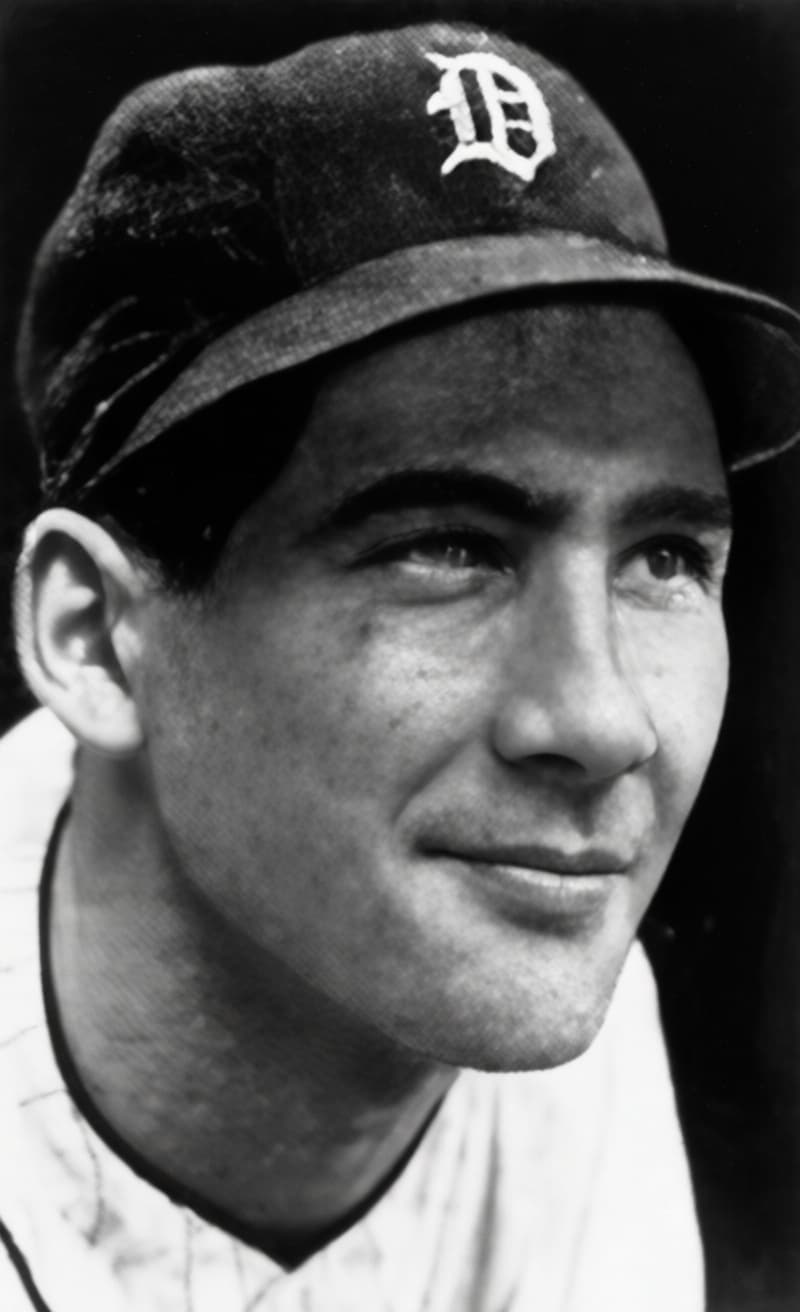
Hal Newhouser portrait.
Photo credit: User-provided image via User-provided image
Harold Newhouser grew up in northwestern Detroit, the son of a Czechoslovak draftsman and an Austrian mother, and at 14 he listened to Goose Goslin's winning hit in the 1935 World Series on the radio and decided he would pitch for the Tigers. Newhouser won 207 games, threw with a blazing fastball and a temper to match, and remains the only pitcher in major league history to win back-to-back MVP awards. He won 29 games in 1944, 25 in 1945, and then silenced every critic who called him a wartime pitcher by going 26-9 with a 1.94 ERA in 1946, after every star returned from the Second World War. "How come, then, was I a wartime pitcher if I struck out more of the big boys than I did during wartime?" Newhouser said. "How come I won more games in 1946 than I did in 1945?" Forty years after his last pitch, he spotted a 17-year-old shortstop in Kalamazoo, Michigan, named Derek Jeter, begged the Houston Astros to draft him first overall, and quit the organization the day after they took someone else. The Veterans Committee elected Newhouser to the Hall of Fame in 1992, and his mother, then in her mid-nineties, was in the crowd at Cooperstown.
Detroit
Newhouser was born on May 20, 1921, in Detroit. His brother Richard, four years older, caught him during sandlot games until a beaning fractured Richard's skull and ended his own baseball career. Tigers scout Wish Egan signed the 17-year-old Newhouser for $500 in 1938. Cleveland scout Cy Slapnicka arrived 10 minutes later with a $15,000 check and a car offer. Newhouser debuted on September 29, 1939, and spent the next four years struggling with his control and his temper. He went 34-52 over his first five seasons, walked a league-high 111 batters in 1943, and once smashed an entire case of Coca-Cola bottles against the clubhouse wall after being pulled from a game.
The transformation began in the winter of 1943, when Newhouser called manager Steve O'Neill to a bowling alley in Cleveland and asked for the chance to pitch every fourth day. O'Neill agreed. Catcher Paul Richards arrived in 1944, added a slider to Newhouser's repertoire, and told him, "You've been a thrower. I'm going to make you a pitcher." The result was the greatest three-year stretch any pitcher produced in the 1940s. Newhouser went 29-9 with a 2.22 ERA in 1944, 25-9 with a 1.81 ERA in 1945, and 26-9 with a 1.94 ERA in 1946. He won the MVP in 1944 and 1945 and finished second in 1946 behind Ted Williams, which was the year that settled the argument about whether his dominance was real.
1945
Newhouser's congenital heart condition, mitral valve prolapse, kept him out of the military despite multiple attempts to enlist. He pitched through the war while healthier players served, and the "wartime pitcher" label followed him for the rest of his career. In the 1945 World Series against the Cubs, Newhouser was shelled in Game 1 (seven runs in fewer than three innings) and came back to win Game 5 with a complete game and Game 7 with a complete game and 10 strikeouts, clinching the championship for Detroit.
On September 22, 1946, Newhouser faced Bob Feller at Cleveland's Municipal Stadium before 38,000 fans and threw a complete game shutout on 97 pitches, allowing two singles, walking nobody, and striking out nine. The Cleveland crowd gave him a standing ovation. On October 3, 1948, he pitched a three-hit, 7-1 complete game victory over Feller on one day's rest before 74,181 fans in Cleveland, preventing the Indians from clinching the pennant that day. George Kell said, "I'll say this about Hal Newhouser, he was the best pitcher I've ever played behind."
Kalamazoo
Newhouser spent four decades as a scout after retirement, working for the Orioles, Indians, Tigers, and Astros. He signed Milt Pappas for the Orioles and Dean Chance for the Orioles. In 1992, as the Michigan area scout for the Astros, he followed a 17-year-old named Derek Jeter at Kalamazoo Central High School and urged the Astros to take him with the first overall pick. "No one is worth a million dollars," Newhouser said, "but if one kid is worth that, it's this kid." The Astros selected Phil Nevin from Cal State Fullerton instead. Newhouser quit the day after the draft, ending a career of more than 50 years in professional baseball. Jeter was taken sixth by the Yankees and became a first-ballot Hall of Famer.
Newhouser served as vice president of Community National Bank in Pontiac for 20 years, and between starts during his playing days he used two film projectors to compare his current mechanics against his peak form, decades before video analysis became standard. He cried when the Veterans Committee called with the Hall of Fame news, not because of the honor, but because his mother was alive to witness it. She was in her mid-nineties at the induction ceremony. "I look over there and see my mother," Newhouser said, "and my wife of fifty years, my two daughters, and my grandson, and my brother, and I just said to myself, thirty-one years of waiting, wasn't it worth it?" Newhouser died of emphysema and heart complications on November 10, 1998, in Southfield, Michigan, at 77. His Hall of Fame plaque reads, "Only pitcher in major league history to win back-to-back MVP Awards."