Profile
Roger Connor
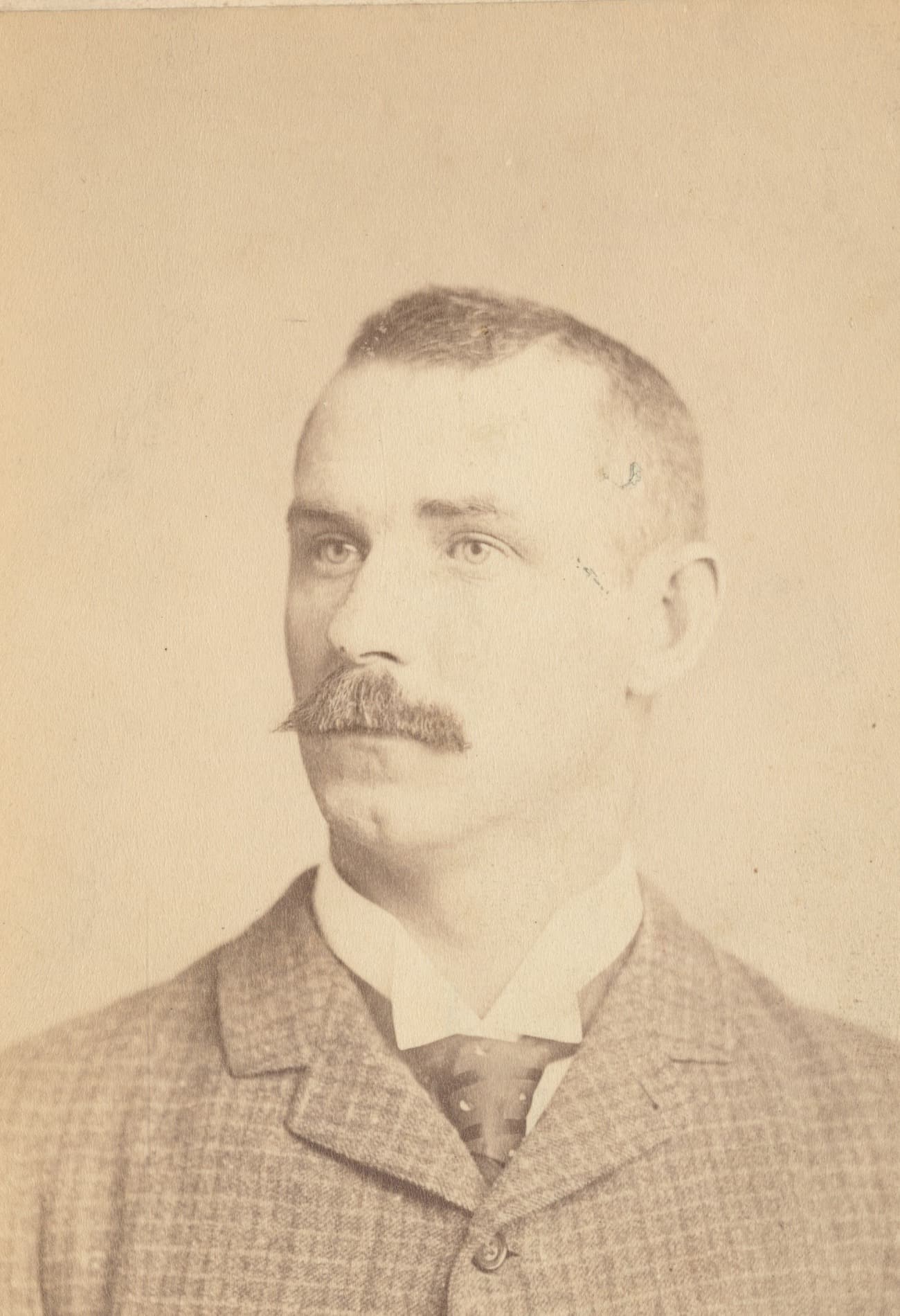
Roger Connor portrait (cropped from NYPL Bain image).
Photo credit: George Grantham Bain Collection / NYPL via Wikimedia Commons (Public domain)
Roger Connor was the home run king of the nineteenth century and nobody remembered. He held the career record with 138 until Babe Ruth surpassed him in 1921, hit .316 over 18 seasons, and accumulated 233 triples that still rank among the highest totals in baseball history. He stood six feet three inches and weighed 220 pounds, enormous for his era, and newspapers called him "the giant of the team" until the nickname attached itself to the entire New York franchise and stayed there permanently. He hit what is believed to be the first grand slam in major league history, launched a home run so far over the Polo Grounds fence that Wall Street brokers in the grandstand took up a collection and presented him with a gold watch, and came out of the Players' League revolt without a single enemy. When he died in 1931, his obituary called him "the Babe Ruth of the '80s." He was buried in an unmarked grave.
Waterbury
Connor was born on July 1, 1857, in Waterbury, Connecticut, the third of 11 children. His father Murtagh, an Irish Catholic immigrant from County Kerry who had arrived in 1852, worked in the Waterbury brass factories and died in September 1874, when Roger was 17. His mother Catherine Sullivan Connor had emigrated from Ireland in 1845. Six sons and three daughters survived childhood, and all six brothers were large. Connor played semipro ball for the Waterbury Monitors in 1877 and tried out with the New Bedford Whalers in 1878, was released, returned to Waterbury, and switched from batting right-handed to left-handed. The improvement got him placed at Holyoke, and by 1879 he was hitting .367 and serving as field captain.
Bob Ferguson signed Connor to the Troy Trojans of the National League in 1880. He hit .332 in 83 games as a third baseman, committing 60 errors at the position before the club moved him to first base, where his size and hands belonged. His teammates at Troy included Dan Brouthers, Buck Ewing, Tim Keefe, and Mickey Welch, four future Hall of Famers on a team that would fold within three years.
On September 10, 1881, against the Worcester Brown Stockings, Connor came to bat in the bottom of the ninth with the bases loaded and two outs. Troy had trailed 7-3 entering the inning and had already scored one run. He drove a pitch from Lee Richmond over the right fielder's head for what is believed to be the first grand slam in major league history. Troy won 8-7. The Troy Daily Times called it "the accidental hit of the Megatherian Connor."
The Giants
When the Troy franchise folded after the 1882 season, Connor moved to the New York Gothams, who became the Giants by 1885, and the new name owed something to Connor's frame. He won the National League batting title that year with a .371 average, leading the league in hits and on-base percentage while striking out only eight times in 506 plate appearances. He hit .355 with 20 triples in 1886 and reached his career high of .383 in 1887 under the anomalous rule that counted walks as hits.
On September 11, 1886, Connor hit a pitch from Old Hoss Radbourn over the right-field wall at the original Polo Grounds, landing the ball on 112th Street. It was believed to be the first home run hit completely out of that park. E.B. Talcott, a Wall Street financier in the grandstand, took up a collection among New York Stock Exchange members and presented Connor with a gold watch. "I used to nail the horsehide over the fence into the tall grass," Connor later recalled, "and that would tickle some of the old New York stockbrokers."
He was also dispatched to a Troy shirt factory to have his uniform tailored, where he met Angeline Mayer, a seamstress who knew her baseball. Too bashful to approach her, he later waited outside the factory hoping she would remember him. When she spotted him, she extended her hand and said, "Hello, Roger Connor." They married and lived together for 47 years.
The Giants won the pennant in 1888 and again in 1889, when Connor led the National League with 130 RBI and hit .343 in the postseason. He was a labor man despite his comfortable $3,500 salary and personal fondness for Giants owner John B. Day, and when the Players' League organized for the 1890 season, Connor was among its earliest enlistees. Day visited the Connor home to plead with him to stay, but Connor refused on principle. He played for Buck Ewing's Players' League Giants at Brotherhood Park, separated by a 10-foot alley from Day's grounds, and produced his finest statistical season at .349 with 14 home runs. The league collapsed in January 1891, and Connor returned to the Giants.
Philadelphia and St. Louis
John Montgomery Ward, managing the Giants by 1894, benched Connor in favor of Jack Doyle, and the club released him in May. Connor signed with the St. Louis Browns and played through the 1897 season, batting .321 and .327 in his first two years there. At 38, he served as player-manager in 1896, going 8-37 with a 15-game losing streak before resigning in July. He was too gentle for the job. The Sporting News noted that Connor "criticized seldom or never, and was always ready with a word of encouragement," a disposition better suited to first base than to managing.
He finished his major league career in May 1897 with 138 home runs, surpassing Harry Stovey's previous record of 122. He was also the first player in major league history to reach 1,000 career walks. In 18 seasons he accumulated 2,467 hits, 441 doubles, 233 triples, and a .316 batting average. His 233 triples remain the fifth-highest total in history, and he was one of the few players of his era who could run, field, hit for average, and hit for power simultaneously.
Connor played and managed in the minor leagues through 1903, owning the Waterbury franchise with Angeline handling gate receipts and their adopted daughter Cecilia helping around the grounds. He wore eyeglasses on the field in his final season and retired at 46.
After the Game
Connor served as a school inspector in Waterbury, overseeing building maintenance and the janitor corps. He and Angeline wintered in Florida during the early 1920s and invested in the real estate boom. The 1926 hurricane and market crash inflicted serious losses, and they were forced to sell their Waterbury home and move in with Cecilia and her husband James Colwell. Angeline died of a heart attack on St. Patrick's Day, 1928.
Connor was diagnosed with cancer of the larynx in 1929, and surgeons removed most of his voice box. He underwent prostate surgery in late 1930 and died of sepsis and chronic heart disease on January 4, 1931, in Waterbury, at 73. He left a $650 debt to the hospital and funeral home, and it took Cecilia years to pay it off. There were no funds for a gravestone. For approximately 70 years, Connor and Angeline lay in unmarked graves at Old St. Joseph's Cemetery until a citizen-led fundraising campaign placed a headstone in 2001.
The Veterans Committee elected Connor to the Hall of Fame in 1976, the year Hank Aaron was finishing the career that had raised the question the committee finally answered. Aaron's 715th home run on April 8, 1974, broke Ruth's record and reminded the baseball world that Ruth had broken someone's record too. The spotlight fell on the long-forgotten Connor. His grandson Francis Colwell accepted the plaque at Cooperstown. Bill Klem, the legendary umpire who would himself be inducted posthumously in 1953, had campaigned for Connor's inclusion for years before his death in 1951. Connor's obituary in 1931 had opened with the phrase that captured the shape of his legacy perfectly. He was "the Babe Ruth of the '80s," which meant that even in death, his name required someone else's to be understood.