Profile
Tom Yawkey
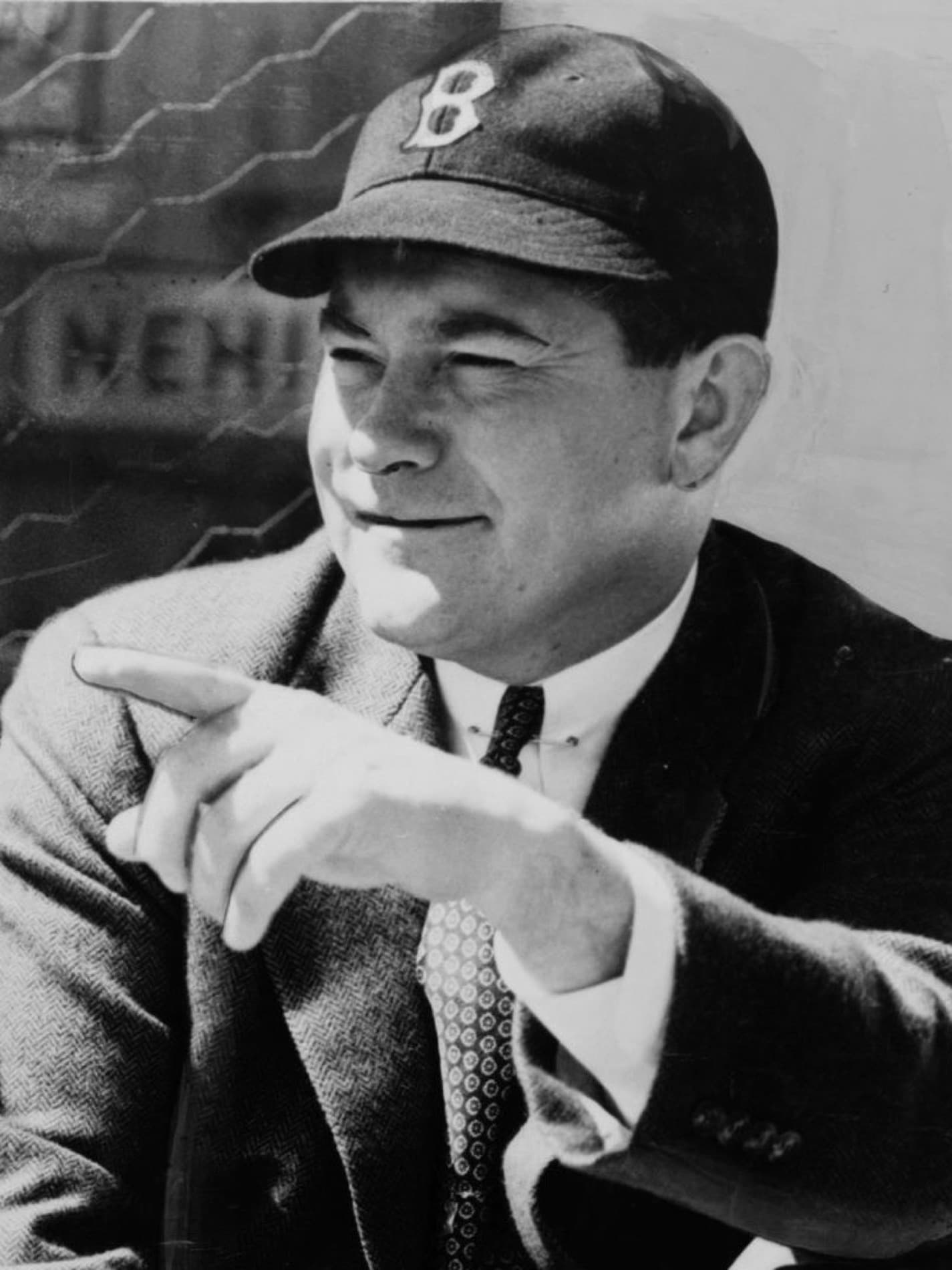
Tom Yawkey portrait.
Photo credit: New York World-Telegram and Sun via Wikimedia Commons (Public domain)
Thomas Austin Yawkey owned the Boston Red Sox for 44 seasons, spent more money on players than any owner of his generation, renovated Fenway Park into the ballpark it remains today, and presided over a franchise that was the last in the major leagues to field a black player. He won three pennants and lost all three World Series in seven games. Red Smith wrote that Yawkey was "a strange fish who was in baseball not to make a buck or feed his ego but because he happened to love the game." That love did not extend, for decades, to black players. The Veterans Committee elected him to the Hall of Fame in 1980.
Detroit
Yawkey was born Thomas Yawkey Austin on February 21, 1903, in Detroit. His father Thomas J. Austin, an insurance executive, died when Yawkey was seven months old. His mother Augusta died of influenza in 1918, and Yawkey was adopted at 15 by his uncle William H. "Bill" Yawkey and his wife Margaret. The name changed from Austin to Yawkey. Bill Yawkey's fortune came from his father's lumber and mining operations, and when Bill died in 1919, Yawkey inherited roughly half of a $40 million estate. He attended the Irving School in Tarrytown, New York, and earned a degree in forestry and mining from the Sheffield Scientific School at Yale.
"Some men like to spend their dough on fast horses," Yawkey said. "Some go nuts for paintings. But my passion is baseball. My idea of heaven is a pennant winner." Four days after his 30th birthday in February 1933, when he gained full access to his inheritance, Yawkey purchased the Red Sox and Fenway Park for $1.25 million. The 1932 Red Sox finished 43-111, the worst record in franchise history. Yawkey spent $1.5 million renovating the stadium and millions more acquiring players, losing $1.7 million in his first seven years.
Fenway Park
Yawkey hired Eddie Collins as general manager and bought or acquired Lefty Grove, Jimmie Foxx, and Joe Cronin, paying $250,000 for Cronin's contract in October 1934. Cronin managed for 13 years. The Red Sox reached .500 by 1934 and won their first pennant since 1918 in 1946, losing the World Series to the St. Louis Cardinals in seven games. Bobby Doerr, Ted Williams, and Dom DiMaggio anchored the roster, and Yawkey treated Williams with a deference that bordered on reverence. "No one thought more of Tommie Yawkey than I did," Williams said.
The Red Sox won the pennant again in 1967 on what fans called the Impossible Dream, losing the World Series to the Cardinals in seven games. They won again in 1975, losing to the Cincinnati Reds in seven games. Yawkey never won a championship.
Integration
The Red Sox were the last major league team to integrate. On April 16, 1945, Boston City Councilman Isadore Muchnick threatened to deny the team's Sunday baseball license unless they held a tryout for black players. The Red Sox brought in Jackie Robinson, Sam Jethroe, and Marvin Williams for what participants described as a farce. Robinson said he left humiliated, and multiple accounts report that someone from the Red Sox management shouted racial epithets during the workout.
Pumpsie Green made his debut on July 21, 1959, 12 years after Robinson broke the color line with the Dodgers. The Red Sox signed no black free agents during a 17-year span stretching from 1976 through 1993, a period that included Jean Yawkey's stewardship after Tom's death. The delay in integrating and the franchise's long reluctance to pursue black talent define Yawkey's legacy as much as his generosity and his love of the game.
South Carolina
Yawkey adopted the Jimmy Fund, the fundraising arm of the Dana-Farber Cancer Institute, as the Red Sox's official charity in 1953 and chaired its board. He purchased a 20,000-acre property in Georgetown, South Carolina, that he willed to the state's Department of Natural Resources, creating the Tom Yawkey Wildlife Center, one of the largest conservation grants in American history. The Yawkey Foundation, established by his will, distributed more than $230 million to hospitals, universities, and youth programs in the decades following his death.
Yawkey died of leukemia on July 9, 1976, in Boston, at 73. His second wife Jean became team president and maintained ownership until her death in 1992. The Yawkey Trust sold the Red Sox to John Henry, Tom Werner, and Larry Lucchino in 2002, ending 69 years of Yawkey family ownership.
In 1977 the city of Boston renamed Jersey Street outside Fenway Park as Yawkey Way. In 2018, after the Red Sox ownership requested the change, the city renamed it Jersey Street again, citing Yawkey's record on race. A commemorative plaque was removed from the Fenway Park offices that May. Owner John Henry said he was "haunted by what occurred" under the team's previous ownership, "a long time before we arrived."