Profile
Martin Dihigo
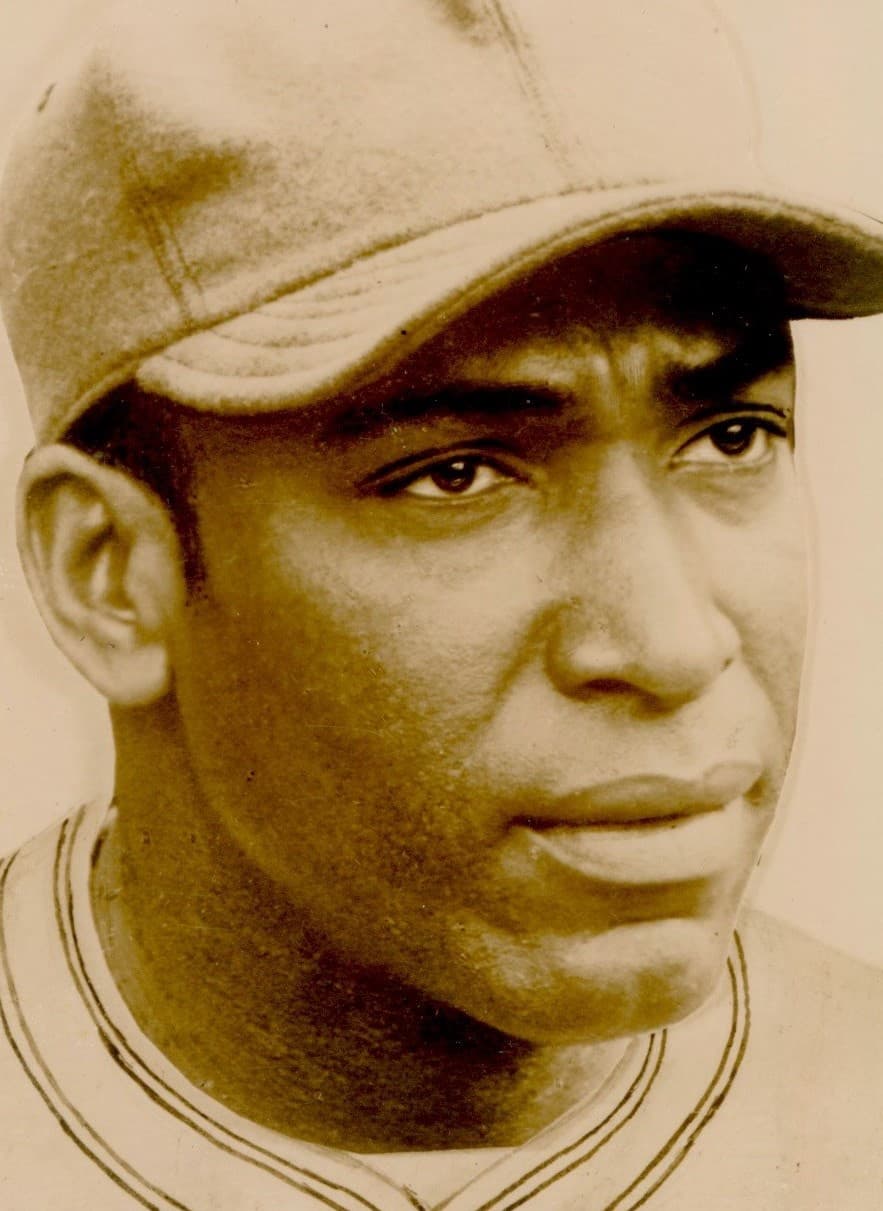
Martin Dihigo portrait.
Photo credit: Unknown author via Wikimedia Commons (Public domain)
Martin Magdaleno Dihigo Llanos played all nine positions during a career that spanned 25 years, five countries, and four Halls of Fame. He won batting titles as a hitter and ERA titles as a pitcher, pitched hitless games in Mexico, Venezuela, and Puerto Rico, and earned the judgment of multiple Hall of Famers that he was the greatest player they ever saw. Buck Leonard said, "He was the greatest all-around player I know. I'd say he was the best ballplayer of all time, black or white." Johnny Mize called him "the only guy I ever saw who could play all nine positions, manage, run, and hit from both sides." Cumberland Posey said his "gifts afield have never been approached by any man, black or white." Al Campanis, the Dodgers general manager who scouted talent for decades, ranked him above Roberto Clemente and Willie Mays.
Matanzas
Dihigo was born on May 25, 1906, on the Jesus Maria sugar plantation near Limonar in Matanzas Province, Cuba. His father Benito served as a sergeant in the Cuban Liberation Army that fought against Spain. His paternal grandparents were reportedly indentured workers at the sugar mill. The family moved to the Pueblo Nuevo barrio of Matanzas when Dihigo was four, and his childhood home stood less than a hundred yards from Palmar de Junco, the site of Cuba's first organized baseball game. He practiced there as a boy, and by the time he was a teenager he was playing in the Cuban professional league.
Dihigo debuted in the Cuban winter league in the 1922-23 season as a substitute infielder for Habana at 16. Dihigo first came to the United States in 1923 with the Cuban Stars of the Eastern Colored League, where scouts praised his speed and range at second base and shortstop. Dihigo was a light hitter early on, struggling with curveballs until he deliberately set out to conquer the pitch. "Don't throw me any more fastballs," he told a teammate. "Throw me curves."
Five Countries
Dihigo evolved from an infielder into an outfielder and then into a dominant pitcher, and the evolution never stopped because his talent had no natural position. In the Negro Leagues he played 14 campaigns for the Cuban Stars, the Homestead Grays, the Hilldale Giants, the Baltimore Black Sox, and the New York Cubans, hitting .307 with 64 home runs and a .511 slugging percentage. He led the league in home runs in 1926 and 1935. As a pitcher in the Negro Leagues, he went 26-19 with a 2.92 ERA.
In Cuba, where the seasons were short and the competition was fierce, Dihigo pitched to a 107-57 record and hit .296 across roughly 20 seasons. Dihigo won the Cuban League MVP four times, in 1927-28, 1935-36, 1936-37, and 1941-42. On the final day of the 1927 season, trailing Willie Wells for the batting title, Dihigo went 5-for-5 to win it.
Mexico was where Dihigo became something close to impossible. Dihigo arrived in 1937 and threw the first game pitched without a hit in Mexican League history on September 16 for Veracruz. The following year he went 18-2 with a 0.90 ERA while simultaneously winning the batting title at .387. In 1942, at 36, he won 22 games. His composite Mexican League record was 119-57. Dihigo also pitched in Venezuela and pitched a game without a hit there, and pitched in Puerto Rico and pitched a game without a hit there, giving him hitless games in three different countries.
On September 5, 1938, in the Mexican League championship, Dihigo and Satchel Paige dueled for eight innings in a 1-1 tie. Paige was lifted for a reliever in the ninth, and Dihigo hit a walk-off home run to win the championship.
El Maestro
Dihigo managed wherever he played, and the stories that followed him were as varied as the positions he took. In one game he fielded an outfield hit, jogged the ball to the infield, politely asked a runner to adjust a dusty base, and tagged the confused runner out. In another he ran from third base screaming "You balked!" at the pitcher, froze the man on the mound, and walked home for one of the most creative steals of home plate anyone witnessed. Buck Leonard described a home run at Pittsburgh's Greenlee Field that landed on a hospital rooftop. In Havana, Dihigo was matched against a professional jai alai player in a throwing contest. The jai alai player hurled a ball with his cesto that reached the center field wall on one bounce. Dihigo threw bare-handed from home plate and the ball hit the wall on the fly.
His composite statistics across all leagues, reconstructed from incomplete records, show a batting average above .300 and a pitching record near 252-132 over 25 years. Minnie Minoso, who grew up in Matanzas Province and carried Dihigo's shoes and gloves to the ballpark as a child just to get inside, credited him as "most responsible for me getting to the major leagues." Minoso said, "He was a big man, but he was big in all ways, as a player, as a manager, as a teacher, as a man."
Cienfuegos
Dihigo left Cuba in March 1952 to protest Fulgencio Batista's seizure of power. Dihigo supported the revolutionary movement and reportedly helped fund Fidel Castro's forces during the Sierra Maestra campaign. After the revolution succeeded in 1959, Dihigo returned permanently and worked as an instructor with Cuba's new amateur baseball programs. He appeared at official ceremonies and threw ceremonial first pitches at stadium dedications.
Dihigo was inducted into the Cuban Baseball Hall of Fame in 1951, the Mexican Professional Baseball Hall of Fame in 1964, the National Baseball Hall of Fame in 1977, and the Dominican Republic's Hall of Fame as well, making him the only player enshrined in four countries. Dihigo died of a cerebral thrombosis on May 20, 1971, in Cienfuegos, at 64. The country mourned publicly. His son Martin Jr. signed with the Cincinnati Reds' minor league system in 1959 at 16 and played alongside Pete Rose and Tony Perez in Geneva, New York, before returning to Cuba in 1962. His son Gilberto became a sportswriter in Havana and later in Mexico City. Dihigo was buried in his wife's family plot in Cruces, where the town maintains a museum in his honor a few blocks from the cemetery.