Profile
Ray Dandridge
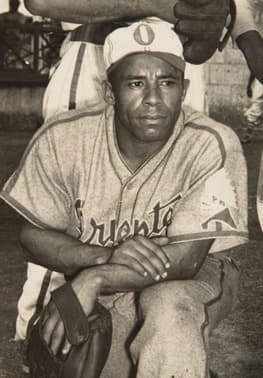
Ray Dandridge portrait.
Raymond Emmett Dandridge stood somewhere between five feet five and five feet seven depending on who was measuring, carried 175 pounds on bowed legs that bent so wide a teammate joked a train could pass through them, and played third base with a quickness that made Monte Irvin say, "People would pay their way in to the game just to see him field." Dandridge batted .355 across two decades in the Negro Leagues and the Mexican League, won the 1950 American Association MVP for the Minneapolis Millers at 36, mentored a 19-year-old Willie Mays on that same Minneapolis club, and never played a single inning in the major leagues because by the time baseball opened its doors to black players, the men who ran the game considered Dandridge too old to walk through them. Roy Campanella called him the best third baseman he ever saw, including Billy Cox. Al Lopez said, "Ray's arms practically dragged the ground. Funny as hell, but the sonofabitch could play ball real good. And he'd throw that ball as soon as he got it. Like Brooks Robinson." The Veterans Committee elected Dandridge to the Hall of Fame in 1987.
Richmond
Dandridge was born on August 31, 1913, in Richmond, Virginia, to Archie and Alberta Dandridge. He boxed in the Golden Gloves and played quarterback in football until a knee injury from a tackle ended that path and left him with baseball. The Detroit Stars of the Negro National League signed him off a sandlot in 1933 at 19, and within months he moved to the Newark Dodgers, another Negro League club, where he hit .436 in his first full season. By 1937 he was the third baseman for the Newark Eagles, the franchise that had absorbed the Dodgers, anchoring what the press called the "Million Dollar Infield" alongside Willie Wells at shortstop, Dick Seay at second, and Mule Suttles at first. Dandridge played in three Negro League East-West All-Star Games and batted .545 in those contests, and his .355 career average in league play ranked among the highest of any player in Black baseball.
Dandridge charged bunts so aggressively he nearly bumped the catcher, a habit he learned from Jud Wilson, who told him to "always charge a ball." He fielded and threw in one motion, adjusting the speed of his throw to match the speed of the runner. "You got to study the man running," Dandridge said. "If he's a fast man, I've got to fire it. If he's a slow man, I'd lob it, just get him by a step." Judy Johnson, the elder statesman at third base, said, "Dandridge was built close to the ground. They would pitch up in his eyes. Right in his alley. Looked like he was chopping wood."
Mexico
In 1939, Mexican League owner Jorge Pasquel offered Dandridge more money than the Newark Eagles could match. Eagles owner Effa Manley recalled that Dandridge came to her with the offer in hand. "Mrs. Manley, this is the money they've given me to come play with them. If you'll give me the same amount, I won't go," he said. She could not. Dandridge spent most of the next decade in Mexico, where the money was better, the racial climate was warmer, and the competition included major leaguers who had jumped their contracts for Pasquel's cash. Dandridge managed Veracruz to a pennant in 1945 by 13 games, hit safely in 29 consecutive games to set a league record, and batted .347 across his Mexican career. In 1945, Pasquel gave him a trophy inscribed with three words. "He came, he conquered."
Bill Veeck of the Cleveland Indians offered Dandridge a chance to play in the major leagues in 1947, potentially as one of the first black players, but Dandridge declined because he did not want to uproot his family from Mexico and Pasquel was paying him $10,000 a year plus living expenses. Dandridge returned to the United States in 1949 and signed with the Minneapolis Millers, the Giants' Triple-A affiliate.
Minneapolis
Dandridge arrived at Minneapolis in 1949 at 35, though he told the Giants he was 30. Manager Tommy Heath asked him to sit and watch when he showed up mid-game. "I came here to play," Dandridge said. "I didn't come here to look around." He hit .362, led all American Association third basemen in fielding percentage, and won Rookie of the Year. In 1950 he hit .311 with 195 hits and 80 RBI and won the league's MVP award, and the Millers won the championship.
The Giants never called him up. They already had Monte Irvin and Hank Thompson, and the informal quota system that limited the number of black players per team left no room for a third. Sal Maglie, who had faced Dandridge in the Mexican League and knew what he could do, urged a Giants scout to bring him up for the final stretch of the 1950 pennant race. The scout said he lacked the authority. "We could have won the pennant," Maglie said. "I know damn well, with Dandridge playing third, we'd have won that pennant in '50." In 1951, the Giants called up a 20-year-old outfielder named Willie Mays after just 35 games at Minneapolis and moved Bobby Thomson to third base rather than promoting the 37-year-old Dandridge.
Dandridge had been mentoring Mays since spotting him in Cuba, recommending him to the Minneapolis front office and batting ahead of him in the lineup. When pitcher Jim Atkins threw three consecutive beanballs at Mays, the five-foot-seven Dandridge walked up to the six-foot-four pitcher and said, "Back home I have two dogs. I have a dog that will go right to your spot if I say 'Bite!' Then I got another one that just sits back until the first one gets through, and then I'll say 'Bite!' again." Atkins responded with a racial slur about Mays, and Dandridge added, "You call him that again and I'll sic my third dog on you." Mays said at Dandridge's Hall of Fame induction, "Ray Dandridge was like my father."
Dandridge eventually confronted Giants owner Horace Stoneham directly. "I cussed him out," Dandridge said. "My ambition was to go from the lowest to the highest. Couldn't you at least have brought me up even for one week, just so I could say I've actually put my foot in a major league park?"
Palm Bay
Dandridge played his final professional games at 42, hitting .360 for an independent team in Bismarck, North Dakota, in 1955. He scouted for the Giants, tended bar in Newark, and retired to Palm Bay, Florida. The Veterans Committee elected him to the Hall of Fame in 1987, and Dandridge was inducted alongside Catfish Hunter and Billy Williams on July 26 at Cooperstown. Dandridge died on February 12, 1994, in Palm Bay, at 80. Cum Posey, who owned the Homestead Grays and watched third basemen for decades, said everything that needed saying in six words. "There never was a smoother master at third."