Profile
Hack Wilson
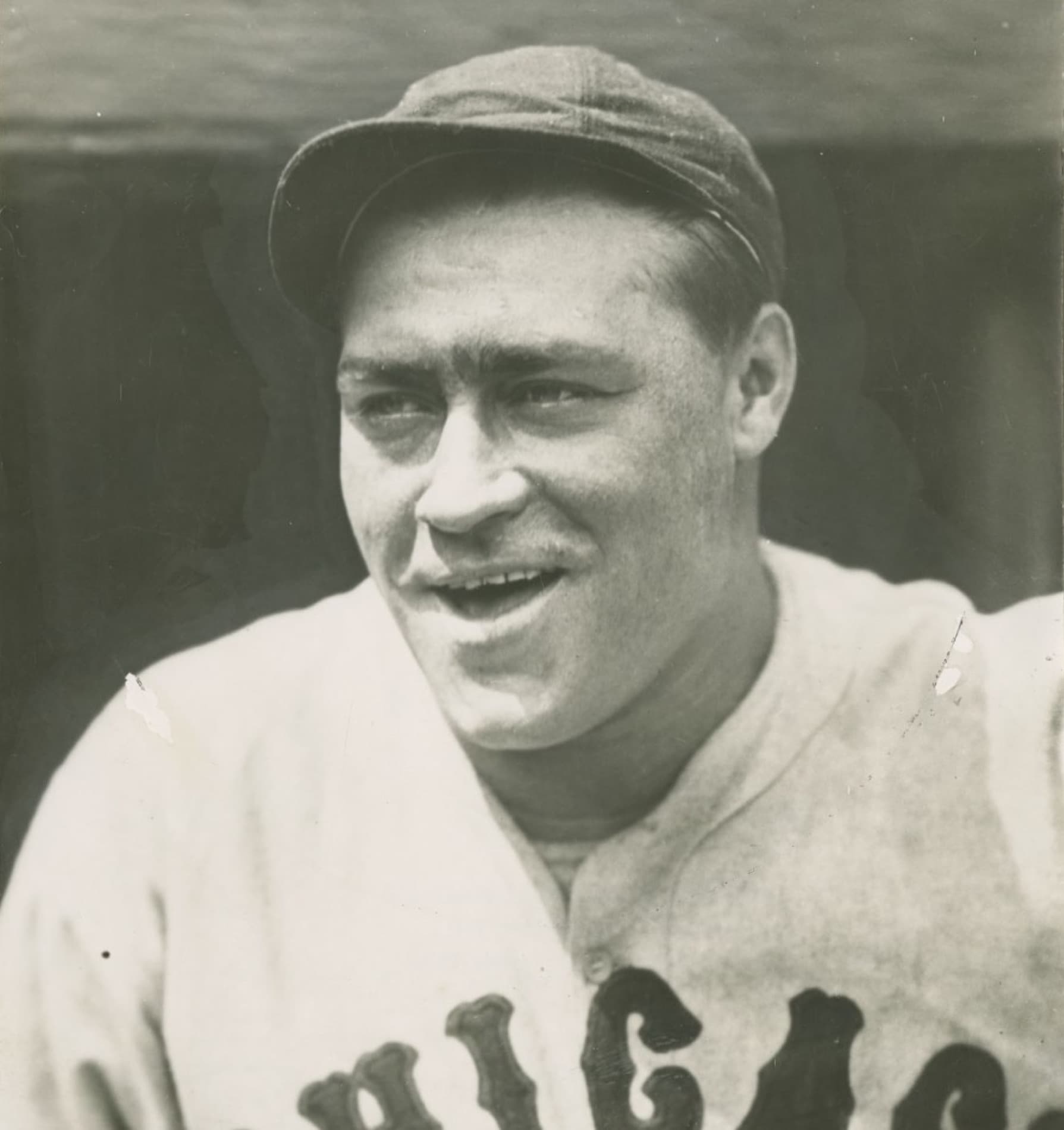
Hack Wilson portrait.
Photo credit: Burke-Briede/BBHOF via Wikimedia Commons (Public domain)
Lewis Robert Wilson stood five-six and weighed 190 pounds, wore size five-and-a-half shoes, and was built, as sportswriters noted without exaggeration, along the lines of a beer keg. "For a brief span of a few years," one of them wrote, "this hammered down little strongman actually rivaled the mighty Ruth." In 1930 Wilson hit 56 home runs and drove in 191 runs for the Chicago Cubs, setting a single-season RBI record that no player in nearly a century has matched. He led the National League in home runs four times, hit .307 for his career, and drank himself out of baseball by 33. He died penniless at 48 in a Baltimore hospital. The Veterans Committee elected him to the Hall of Fame in 1979, 31 years after his death.
Ellwood City
Wilson was born on April 26, 1900, in Ellwood City, Pennsylvania, a steel mill town north of Pittsburgh. His mother Jennie Kaughn was 16 or 17 at his birth and died of appendicitis when Wilson was seven. His father Robert, a steel worker, paid for the funeral and abandoned his son. Both parents were heavy drinkers. Wilson was raised by a boarding house owner named Grandma Wardman and dropped out of school after the sixth grade at 16 to work at a locomotive factory, swinging a sledgehammer for $4 a week. He later worked as a printer's devil at an Eddystone print works while playing semipro baseball on evenings and weekends.
Wilson broke into professional ball with the Martinsburg Blue Sox of the Blue Ridge League in 1921 and broke his leg sliding into home plate in his first game. He recovered, hit .364 with 35 home runs in 114 games, and reached the New York Giants by September 1923. Wilson hit .295 with 10 home runs as a starting outfielder in 1924 and played all seven games of the World Series against Washington, but McGraw lost patience with his slumps in 1925 and sent him to Toledo. The Giants failed to exercise their option on Wilson's contract, a front-office oversight, and the Cubs claimed him for $5,000.
Wrigley Field
Wilson regained his form immediately in Chicago. He hit 21 home runs and batted .321 in 1926, leading the league in home runs for the first time and getting arrested during a Prohibition speakeasy raid while trying to escape through a rear window. He was fined $1. Wilson led the league in home runs again in 1927 and 1928, and in 1929 he hit .345 with 39 home runs and 159 RBI as the Cubs won their first pennant in 11 years.
Joe McCarthy managed Wilson with care and patience. He refused to impose curfews, didn't hire after-hours spies, and bailed Wilson out of jail when necessary. "Better than any other manager, Joe understood Hack," sportswriter Frank Graham wrote, "made allowances for him when he failed, and rewarded him with praise when he did well. Joe could be strict and stern with his players, but he never was with Hack, and Hack repaid him by playing as he never had before, nor would again." McCarthy said simply, "What could a manager say to such a loyal player who had a weakness he could not handle?"
The 1929 World Series brought Wilson's most painful moment. In Game 4, with the Cubs leading 8-0, Wilson lost two fly balls in the sun during the seventh inning. The second error put runners on base for Mule Haas, who hit an inside-the-park home run as part of a 10-run rally that cost the Cubs the game. The Athletics won the Series in five games. Wilson was inconsolable.
191
The 1930 season was Wilson's masterpiece and his destruction. He hit 56 home runs, a National League record that stood until 1998, drove in 191 runs, batted .356, and slugged .723. He walked 105 times and posted an OPS of 1.177. By mid-July he already had 82 RBI. By September 17 he passed Lou Gehrig's record of 175. The record was originally scored as 190 RBI until 1999, when Jerome Holtzman of the Commissioner's office reviewed box scores from a July 28 doubleheader and discovered that Charlie Grimm had been mistakenly credited with an RBI that Wilson drove in. The official total was corrected to 191. No player since Jimmie Foxx drove in 175 in 1938 has come within 15 of the record.
Wilson told Gabby Hartnett, "I never played a game drunk. Hung over, yes. But drunk, no." He knew Al Capone. Capone attended games at Wrigley Field, and when Commissioner Kenesaw Mountain Landis complained about Wilson greeting Capone behind the Cubs dugout, Wilson replied, "Well, Judge, I go over to his place, so why shouldn't he come to mine?"
The Fall
McCarthy was replaced by Rogers Hornsby in 1931, and the relationship between Wilson and his new manager was poisonous from the start. Hornsby was an abstemious disciplinarian who imposed curfews, controlled diets, and restricted Wilson's swing. Wilson reported to spring training 20 pounds overweight, and the National League introduced a heavier ball with raised stitching that curtailed the offense of the previous year. Wilson hit .261 with 13 home runs and was suspended without pay in September. The Cubs traded him to the Cardinals, who shipped him to the Brooklyn Dodgers within a month when Wilson refused a 77 percent pay cut from Branch Rickey.
Wilson batted .297 with 23 home runs and 123 RBI for the Dodgers in 1932 but faded quickly. Brooklyn released him during the 1934 season, calling him "just a fat and fussy little fellow." He played 59 games for the Albany Senators in the minor leagues in 1935 and retired at 35.
Baltimore
Wilson returned to Martinsburg, West Virginia, the town where he played his first professional game, and opened a pool hall with a partner. He was a generous man and a poor businessman and gave away too much for the venture to survive. He tried a sporting goods store, tried bartending near Ebbets Field, tried a nightclub in suburban Chicago. Nothing lasted. He moved to Baltimore with Hazel Miller in 1941, worked as a tool checker at an aircraft plant, tended bar, and finally took a job managing a public swimming pool for the city parks department.
Roughly a week before he died, Wilson appeared on a CBS radio program called "We, the People" and delivered the only public advice he ever offered about his own life. "Talent isn't enough," Wilson said. "You need common sense and good advice. If anyone tries to tell you different, tell them the story of Hack Wilson. There are kids in and out of baseball who think because they have talent they have the world by the tail. It isn't so. Kids, don't be too big to accept advice. Don't let what happened to me happen to you."
On October 4, 1948, Wilson was found unconscious in his apartment after a fall. He died on November 23 at Baltimore City Hospital, at 48, of internal hemorrhaging following pneumonia. His body went unclaimed for three days. His son Robert refused to take responsibility. Drinking friends from the North Street taverns collected hat funds. NL President Ford Frick sent $350 for funeral expenses. A gray burial suit was donated by the undertaker. Wilson was buried at Rosedale Cemetery in Martinsburg.
Joe McCarthy organized a second memorial service the following year, attended by Kiki Cuyler, Charlie Grimm, and other former teammates. They unveiled a granite tombstone that reads, "One of Baseball's Immortals, Lewis R. (Hack) Wilson, Rests Here." Charlie Grimm posted a framed excerpt from Wilson's final radio interview in the Cubs clubhouse. It still hangs there.