Profile
Harry Heilmann
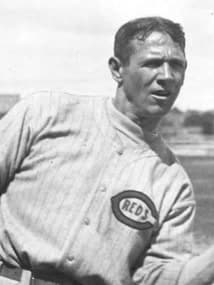
Harry Heilmann portrait (1930).
Photo credit: Unknown author via Wikimedia Commons (Public domain)
Harry Edwin Heilmann won four American League batting titles in alternating odd years, hit .403 in 1923, and finished with a career batting average of .342. Those numbers would make him one of the most celebrated hitters of his era if he had not spent his best years playing alongside Ty Cobb, whose presence in the same lineup ensured that Heilmann was always the second-best hitter on his own team in the public imagination. Heilmann credited Cobb, who managed the Tigers from 1921 to 1926, with transforming his approach at the plate, and the transformation showed in the numbers immediately. The BBWAA elected him to the Hall of Fame posthumously in 1952.
San Francisco
Heilmann was born on August 3, 1894, in San Francisco. He grew up in the city and attended Sacred Heart College before playing semipro ball in the San Francisco area. He signed with the Portland Beavers organization and was assigned to the Portland Colts of the Northwestern League in 1913. The Detroit Tigers drafted him later that year. He debuted in the major leagues on May 16, 1914, at age 19, joining a Tigers roster that featured Cobb and Sam Crawford in the outfield.
He was a large man for his era, listed at 6-foot-1 and 200 pounds, and he played right field and first base across his career. His early years in Detroit were productive but unspectacular. He hit .282 in 1916 and .281 in 1917, showing gap power and a good eye at the plate without suggesting anything extraordinary. He served in the Navy during World War I and missed roughly half of the 1918 season. Through his first six major league seasons he was a solid middle-of-the-order hitter, but nothing in those numbers predicted what was coming.
The Odd-Year Titles
In 1921, Cobb's first full season as Tigers manager, Heilmann batted .394 and won his first batting title. Cobb had worked with him on his stance and grip, teaching him to spread his feet wider and wait longer on the pitch, and the adjustment produced one of the most dramatic improvements in the history of hitting. Heilmann had been a .293 hitter through his first six full seasons, and he became a .390 hitter almost overnight.
In 1923, he hit .403, becoming the last American Leaguer other than Ted Williams to reach .400 in a season. The achievement placed him in a class of hitters that included only a handful of players in the game's history, and he sustained the average across a full season of 144 games rather than achieving it through a limited sample. In 1925, he batted .393, and in 1927 he hit .398, going 7-for-9 in a season-ending doubleheader against the Cleveland Indians to overtake Al Simmons for the title.
The alternating pattern across odd years was genuine coincidence, but it gave sportswriters a story they never tired of telling. In his even years during that same stretch, Heilmann hit .356 in 1922, .346 in 1924, and .367 in 1926, numbers that would have won batting titles in many other seasons. His consistency at the plate during the 1920s placed him among the greatest hitters of a decade that also featured Babe Ruth, Lou Gehrig, and Rogers Hornsby, and his .342 career average ranks among the highest in baseball history.
He finished with 2,660 hits, 183 home runs, and 1,543 RBI across 17 major league seasons, and he drove in 100 or more runs in eight of those seasons. He was not fast, and his defense in right field was adequate rather than distinguished, but his bat was elite by any standard of any era.
Broadcasting
Heilmann left the major leagues after the 1932 season, having played his final two seasons with the Cincinnati Reds. He missed the entire 1931 season due to severe arthritis that had plagued him intermittently throughout his career, and when he returned for a final season in 1932, the body that had produced four batting titles could no longer sustain everyday play.
He transitioned into radio broadcasting and became the voice of the Detroit Tigers, a role he held for 17 years. Fans who had never seen him play came to know him through his warm, conversational delivery behind the microphone, and he became one of the most popular figures in Detroit. His broadcasting style was informal and personal, built on the authority of a man who had stood in the batter's box against the best pitchers of the 1920s and could describe what a hitter was thinking in ways that no writer or analyst could replicate. He was among the first former players to build a successful second career in broadcasting, and his popularity in Detroit during his years behind the microphone rivaled the fame he had earned on the field.
Death
Heilmann was diagnosed with lung cancer in the early 1950s, and his health declined rapidly. He spent his final months hoping for election to the Hall of Fame, aware that the BBWAA vote was approaching and that his candidacy had gained support in recent years. He died on July 9, 1951, the day before the All-Star Game was played at Briggs Stadium in Detroit, at age 56. The BBWAA elected him the following January, granting him posthumously the recognition his playing career had earned and his broadcasting career had kept alive in public memory.