Profile
Willie McCovey
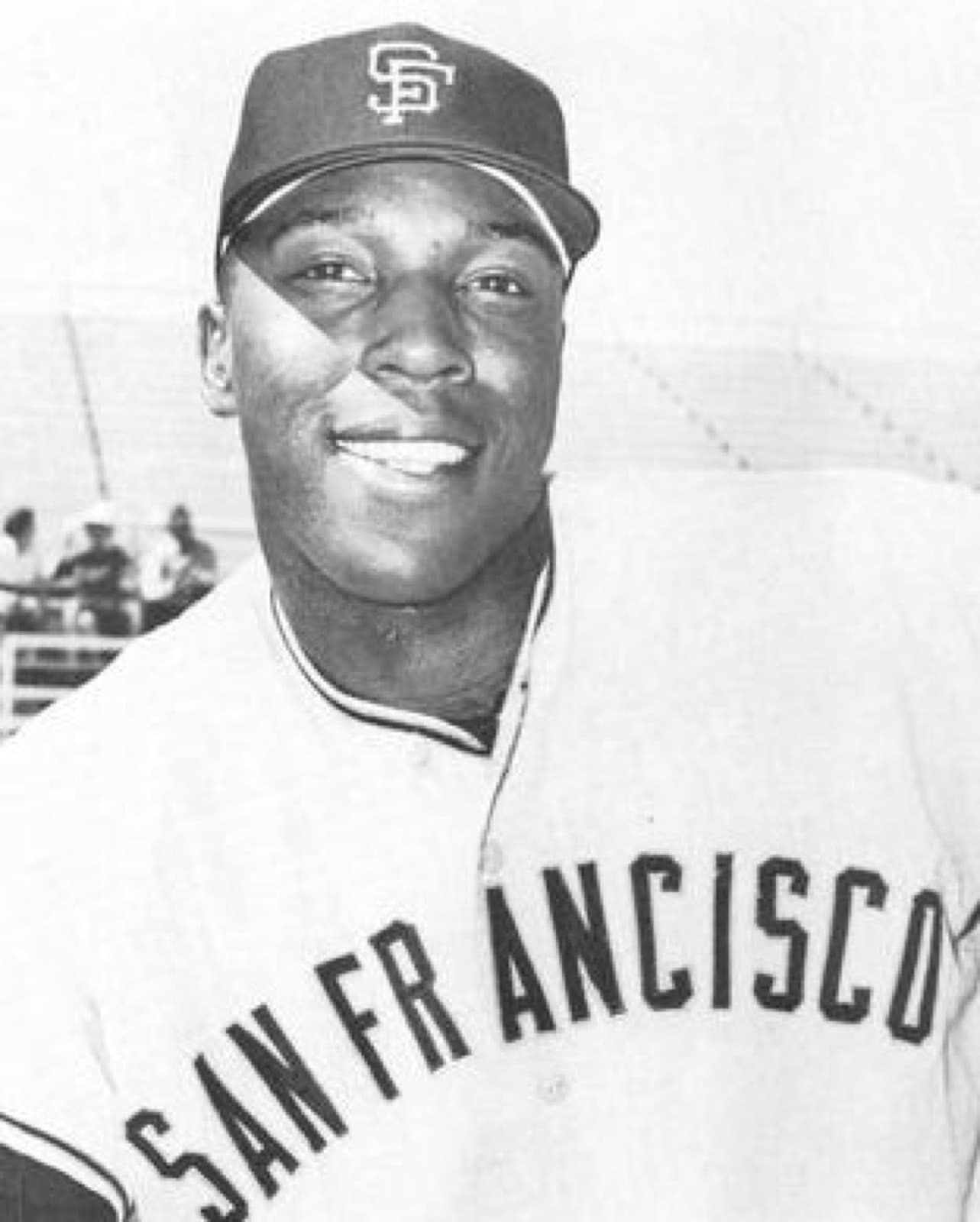
Willie McCovey portrait, 1965.
Photo credit: Unknown author via Wikimedia Commons (Public domain)
Willie Lee McCovey went 4-for-4 in his major league debut against Robin Roberts, hitting two singles and two triples, and spent the next 22 seasons hitting baseballs so hard that Jim Bouton, in "Ball Four," described pitchers watching McCovey take batting practice and making "little whimpering animal sounds" with each swing. McCovey hit 521 home runs, won the 1959 NL Rookie of the Year and the 1969 NL MVP, drove in 1,555 runs, drew 260 intentional walks, and produced a 1969 season (45 home runs, .320 average, .656 slugging) so dominant that Sparky Anderson said, "If you pitch to him he'll ruin baseball. He'd hit 80 home runs." Bob Gibson called him "the scariest hitter in baseball." Willie Mays, who roomed with McCovey and mentored him through his first years in San Francisco, said, "He could hit a ball farther than anyone I ever played with." The BBWAA elected McCovey to the Hall of Fame in 1986 on 81.4 percent of the ballot.
Mobile
McCovey was born on January 10, 1938, in Mobile, Alabama, the seventh of 10 children. His father Frank worked for the railroad, and the family attended church every Sunday in a household where smoking was forbidden. McCovey began delivering newspapers at 12 and dropped out of Central High School in 1954 to work in a bakery and help support his family. He chose uniform number 44 in honor of fellow Mobile native Hank Aaron.
Giants scout Alex Pompez signed McCovey at a tryout in Melbourne, Florida, for $175 a month and a $500 bonus after another scout had passed on him, saying, "Nobody thought that he was going to be able to make it." McCovey debuted on July 30, 1959, against the Phillies and went 4-for-4 off Roberts, a Hall of Famer who could not retire him. McCovey hit .354 with 13 home runs in 52 games and won the Rookie of the Year award.
Stretch
McCovey and Orlando Cepeda were both first basemen born four months apart who arrived in San Francisco at 22, and the Giants could not play them both at their natural position. The club moved McCovey to left field, where he once led the league with 13 errors in a single season while simultaneously hitting 44 home runs. "I knew I wouldn't be a Willie Mays," McCovey said, "and anybody who saw me play there could tell that right away. But I learned. I think I played it adequately." The impasse ended when Cepeda was traded to St. Louis in May 1966, and McCovey took over first base for good.
McCovey's peak came in 1969, when he hit 45 home runs with 126 RBI, a .320 average, and a then-record 45 intentional walks. He won the NL MVP over Tom Seaver, earned the All-Star Game MVP after hitting two home runs, and led the league in slugging at .656. Casey Stengel, speaking to a pitcher before a McCovey at bat, offered the most concise scouting report possible. "Where do you want to pitch him, upper deck or lower deck?"
On October 16, 1962, McCovey hit one of the most famous outs in baseball history. Game 7 of the World Series, bottom of the ninth, Giants trailing 1-0, runners on second and third, two outs. Yankees manager Ralph Houk chose to pitch to McCovey rather than walk him. McCovey ripped a hard line drive that Bobby Richardson caught at second base. Two months later, Charles Schulz turned it into a "Peanuts" strip. Charlie Brown's lament became one of the most quoted lines in the history of the comic. "Why couldn't McCovey have hit that ball three feet higher!"
McCovey Cove
McCovey was traded to San Diego after the 1973 season and spent parts of three seasons with the Padres and 11 games with the Oakland Athletics before returning to San Francisco in 1977 with no guaranteed roster spot, at 39 years old. He hit 28 home runs that year and won the NL Comeback Player of the Year award. On Willie McCovey Day, he ended the game with a walk-off single in the bottom of the ninth off Pedro Borbon. The standing ovation at the home opener when he returned left him in tears.
McCovey hit his 500th home run on June 30, 1978, off Jamie Easterly in Atlanta, and his 521st and final home run on May 3, 1980, off Scott Sanderson in Montreal, tying Ted Williams at a number where both men remain. The Giants retired his number 44 on September 21, 1980, and created the Willie Mac Award, given annually for spirit and leadership. When Oracle Park opened in 2000, the inlet of San Francisco Bay beyond the right field fence was named McCovey Cove, where fans in kayaks chase home run balls into the water.
McCovey served as a Giants senior advisor for 18 years and married longtime girlfriend Estela Bejar at the ballpark on August 1, 2018, less than three months before his death. McCovey died on October 31, 2018, at Stanford University Medical Center, at 80, with Hall of Famer Joe Morgan at his bedside. Walter Alston, who managed against McCovey for more than a decade, once said that when McCovey belted a home run, "he does it with such authority it seems like an act of God."