Profile
Duke Snider
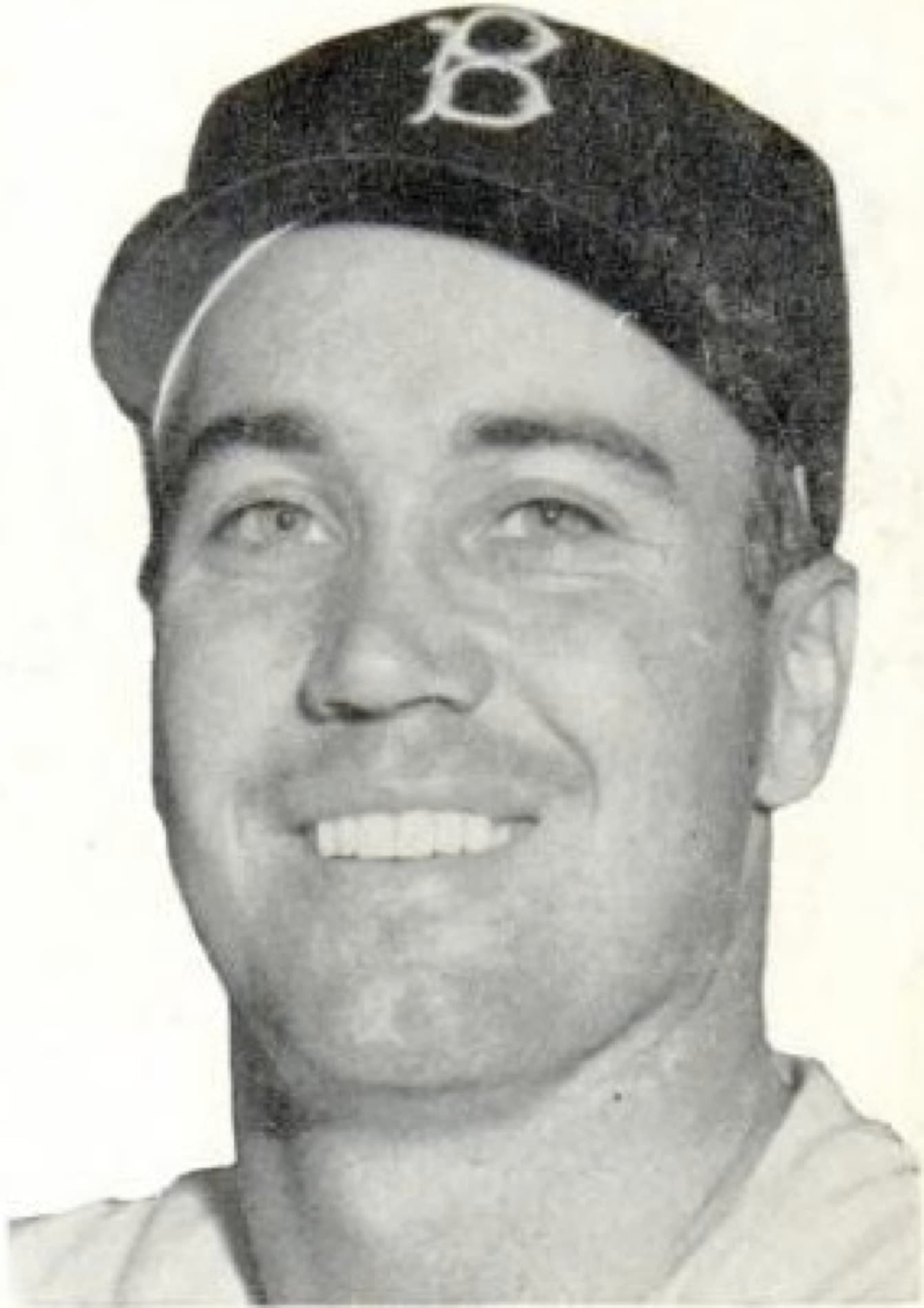
Duke Snider portrait, 1954.
Photo credit: Unknown author via Wikimedia Commons (Public domain)
Edwin Donald Snider hit 40 or more home runs in five consecutive seasons for the Brooklyn Dodgers, drove in more runs during the 1950s than any other player in baseball, and hit four home runs in a World Series twice, a feat nobody else accomplished. His father Ward gave him the nickname Duke at age five for his swagger, and the fans at Ebbets Field turned it into a title. He was the Duke of Flatbush, and for seven years he played center field in the same city as Willie Mays and Mickey Mantle, fueling a debate that Terry Cashman immortalized in a 1981 song and that New Yorkers of a certain age never tired of arguing. The BBWAA elected Snider to the Hall of Fame in 1980 on 86.5 percent of the ballot.
Compton
Snider was born on September 19, 1926, in Los Angeles and grew up in Compton, California. His father Ward played semipro baseball in Ohio before moving west. Snider starred in basketball, football, and baseball at Compton High School, where he could reportedly throw a football 70 yards as the quarterback. Branch Rickey's Brooklyn Dodgers signed him out of high school in 1943, and after a season in the Class B Piedmont League and 18 months of Navy service during the Second World War, Snider worked his way through the Dodgers' farm system. Manager Burt Shotton described him as "a player who needed to be kicked to perform at his best."
Snider made his major league debut on April 17, 1947, two days after Jackie Robinson broke the color line. Snider refused to sign the petition organized against Robinson joining the team. He became a regular in 1949 and hit 23 home runs, but his early reputation was as much about temperament as talent. Pee Wee Reese told him to "grow up and stop his moaning" after Snider erupted over a take sign. The growing up happened.
Ebbets Field
Ebbets Field was built for a left-handed pull hitter, with a right field fence 297 feet from home plate, and from 1953 through 1957 Snider treated it accordingly. He hit 42 home runs in 1953 with 126 RBI and a .336 average, finishing third in MVP voting. In 1954 he batted a career-high .341. In 1955 he hit 42 home runs and led the league with 136 RBI, finished second in MVP voting to teammate Roy Campanella, and led the Dodgers to the only World Series championship Brooklyn ever won.
Snider remains the only player to hit four or more home runs in two separate World Series. Snider hit four home runs in the 1952 Series and four more in the 1955 Series, including two solo shots off Bob Grim in Game 5. The Dodgers won the 1955 championship in seven games, and Snider was the last living Brooklyn Dodger who stood on the field for the final out.
Snider hit 43 home runs in 1956, leading the league for the first time, and 40 in 1957. On September 22, 1957, he hit the last home run at Ebbets Field, a shot off Robin Roberts, in what turned out to be the ballpark's final season. The Dodgers left Brooklyn for Los Angeles that winter, and Snider went reluctantly. Ebbets Field was his instrument, and the Los Angeles Memorial Coliseum, with a right-center field fence 440 feet from home plate, took it away. Snider hit only 15 home runs in 1958. He rebounded to .308 with 23 home runs in 1959 and won a second championship when the Dodgers defeated the White Sox in the World Series.
After Brooklyn
Snider hit 19 career home runs off Robin Roberts, more than any batter collected off a single pitcher in major league history. He finished with 407 home runs, 1,333 RBI, 2,116 hits, and a .295 career average. In 36 World Series games he batted .286 with 11 home runs and 26 RBI.
The Dodgers sold Snider to the New York Mets in 1963, and he hit 14 home runs in what amounted to a sentimental reunion with the city that loved him most. Snider played his final season with the San Francisco Giants in 1964. Mays offered the best tribute from a rival who understood. "Duke was a fine man, a terrific hitter and a great friend," Mays said.
Snider broadcast games for the San Diego Padres and Montreal Expos after his playing career and published an autobiography, "The Duke of Flatbush," in 1988. In 1995 he pleaded guilty to federal tax fraud for failing to report income from baseball card shows and received two years' probation and a fine. President Barack Obama granted Snider a posthumous pardon in January 2017.
Snider died on February 27, 2011, at a convalescent hospital in Escondido, California, at 84. The Dodgers retired his number 4 in 1980, the year of his induction. Duke Snider once said, "Without Rickey, I would never have made it." The five consecutive 40-homer seasons, the 11 World Series home runs, the game in the middle of a city that argued about center fielders the way other cities argued about politics proved that Rickey's investment paid off.