Profile
Heinie Manush
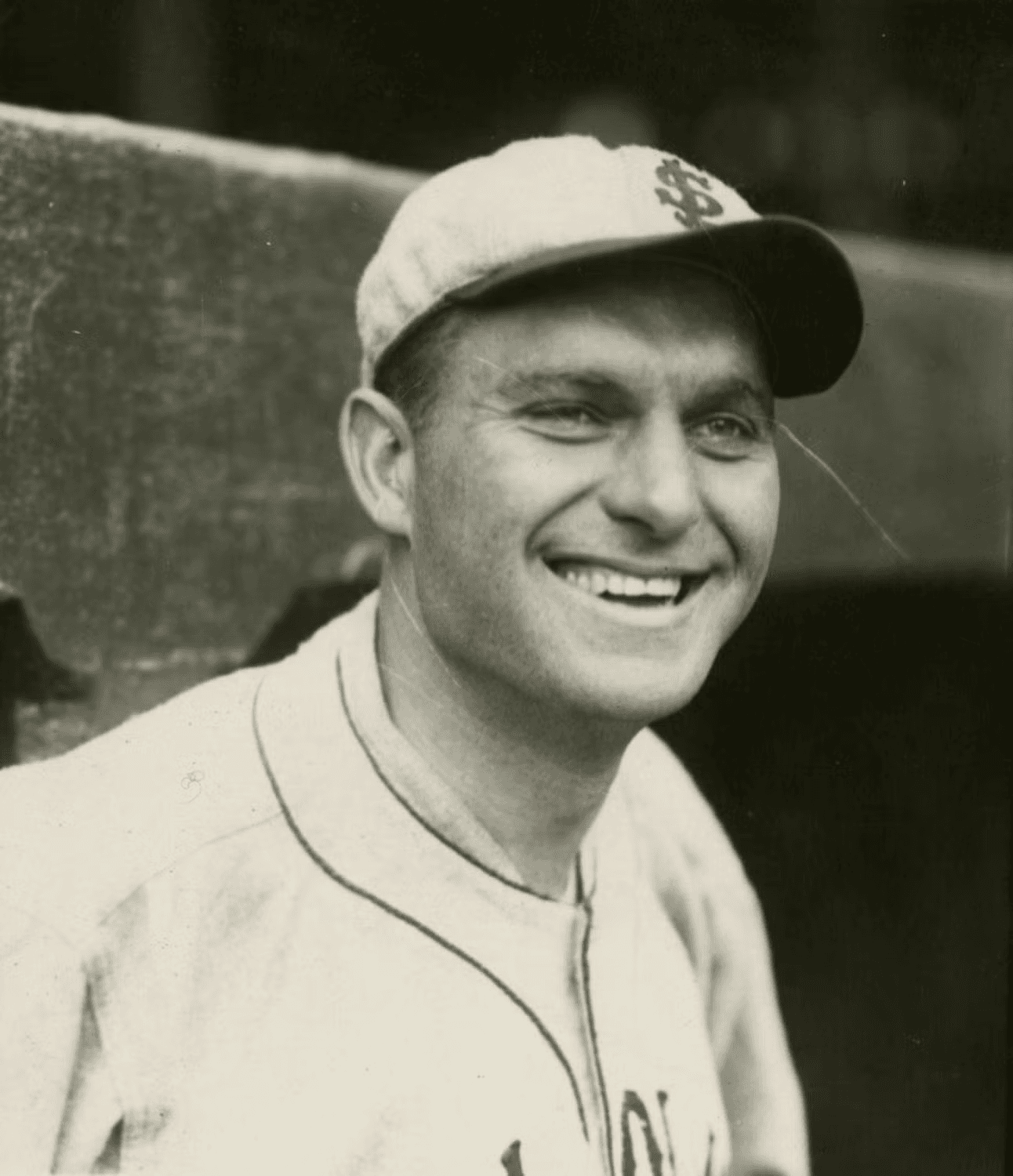
Heinie Manush smiling portrait in cap.
Photo credit: User-provided image via User-provided image
Heinie Manush hit .330 over 17 major league seasons, collected 2,524 hits, and won the 1926 American League batting title on the final day of the season in a finish so close that the league rechecked the arithmetic afterward. He played for six teams across two decades, never stayed anywhere long enough to become the face of a franchise, and spent years waiting for the recognition that his numbers had always supported. The Veterans Committee elected him to the Hall of Fame in 1964, a quarter century after he played his last game.
Tuscumbia
Henry Emmett Manush was born on July 20, 1901, in Tuscumbia, Alabama, a small town along the Tennessee River. He grew up in a German-American family and acquired the nickname "Heinie" as a child. He was a left-handed hitter with a line-drive stroke that sent balls screaming into the gaps, and he reached the majors with the Detroit Tigers in 1923 after a brief minor league apprenticeship. He hit .334 in his first full season and immediately looked like a hitter who belonged in the middle of a major league lineup.
The Batting Race
Manush played under Ty Cobb in Detroit, and Cobb, who had won 12 batting titles himself, pushed Manush to refine his approach at the plate. The tutoring produced results. In 1926, Manush entered the final day of the season trailing Babe Ruth in the American League batting race. Ruth went 0-for-1 in the first game of a doubleheader and sat out the second game, while Manush went 6-for-9 across both games to finish at .378, edging Ruth's .372. The title was the signature achievement of Manush's career and one of the tightest batting races of the decade.
The Tigers also had Harry Heilmann in the outfield during Manush's early years, giving Detroit two outfielders who consistently ranked among the league's best hitters. But the Tigers traded Manush to the St. Louis Browns after the 1927 season, beginning a pattern of moves that would define his career. He hit .378 for the Browns in 1928 and .355 in 1929, two seasons as productive as anything he had done in Detroit, but St. Louis traded him to the Washington Senators in June 1930 as part of the franchise's chronic inability to build around its best players.
Washington
Manush found his best supporting cast in Washington. He batted .307 in 1931 and .342 in 1932, and he teamed with Joe Cronin, Goose Goslin, and other veterans to push the Senators into the 1933 World Series against the New York Giants. The Giants won in five games, and Manush made headlines during the Series for an outburst that overshadowed his performance at the plate. After a disputed call at first base in Game 4, Manush grabbed umpire Charlie Moran by his bow tie and snapped it against his neck. Umpire Moran ejected Manush from the game, making him the first player ever thrown out of a World Series. The incident captured the competitive fury that drove Manush on the field, even when it tipped into something the rulebook could not tolerate.
Manush batted .336 in 1933 and .349 in 1934, two more seasons that reinforced his standing among the league's elite hitters. He led the American League in both hits with 221 and triples with 17 in 1933, numbers that demonstrated the range of his offensive game. He hit for average, drove the ball into the gaps, and ran well enough to stretch doubles into triples with regularity.
Journeyman's End
After the 1935 season, the Senators traded Manush to the Boston Red Sox. He spent part of 1936 in Boston before moving to the Brooklyn Dodgers and then to the Pittsburgh Pirates, playing his last major league game in 1939 at age 37. He managed and scouted in the minor leagues for several years afterward, working for the Senators and the Red Sox in various capacities. His career totals of 2,524 hits and a .330 batting average placed him among the most productive hitters of the 1920s and 1930s, but the lack of a long tenure with a single high-profile team kept him out of the Hall of Fame conversation for decades.
The Veterans Committee corrected that in 1964, electing Manush alongside Red Faber, Burleigh Grimes, Miller Huggins, Tim Keefe, and John Montgomery Ward. He died on May 12, 1971, in Sarasota, Florida, at age 69. His career batting average remains one of the highest among Hall of Famers, and his 2,524 hits testify to a consistency that persisted across 17 seasons and six franchises even as the teams around him kept changing.